


What Should You Do Before Hardwood Floor Installation?
Before hardwood floor installation, remove furniture and fragile items, provide clear access to the work area, and make arrangements for pets and children. Your installer should also evaluate the existing flooring, subfloor condition, room layout, and moisture levels before work begins. Depending on the flooring product, the hardwood may need time to acclimate to your home’s indoor environment. Proper moisture testing and subfloor preparation are especially important because they help prevent problems such as movement, gaps, squeaks, and uneven flooring after installation.
Hardwood Floor Installation: What to Expect From Start to Finish
Hardwood Floor Installation is the process of preparing a home, installing hardwood flooring, and finishing the project to create a durable, beautiful floor that can last for decades. Professional installation ensures proper moisture control, subfloor preparation, and long-term performance.
Installing hardwood flooring is one of the most rewarding home improvements you can make. New hardwood floors instantly transform the appearance of a home while adding warmth, elegance, and long-term value.
Many homeowners wonder what actually happens during installation. How long will it take? Will there be a lot of dust? Do you need to move your furniture? How soon can you walk on your new floors?
At Classic Floor Designs, we guide homeowners throughout Washington DC, Bethesda, Potomac, Chevy Chase, and Northern Virginia through every step of the installation process. This guide explains exactly what you can expect before, during, and after your hardwood flooring installation.
Quick Answer
Professional Hardwood Floor Installation typically includes an in-home consultation, moisture testing, subfloor preparation, acclimation of the flooring when required, installation, trim work, cleanup, and a final walkthrough. Most residential installations take several days, depending on the size and complexity of the project.
Quick Facts
| Item | Typical Information |
| Installation Time | Several days (varies by project) |
| Furniture Removal | Usually required |
| Subfloor Inspection | Yes |
| Moisture Testing | Recommended |
| Professional Cleanup | Yes |
| Adds Home Value | Yes |
Planning Your Hardwood Floor Installation
Every successful flooring project begins with careful planning.
During your consultation, you’ll typically discuss:

- Wood species
- Color
- Finish
- Plank width
- Solid vs. engineered hardwood
- Budget
- Project schedule
Measurements are taken so your installer can accurately estimate materials and identify any challenges before work begins.
Before Installation Day
Several important steps take place before the first board is installed.
Product Selection
Choose the flooring that best fits your home and lifestyle.
Site Evaluation
The installer evaluates:
- Existing flooring
- Subfloor condition
- Room layout
- Moisture levels
- Transitions
- Staircases
Material Ordering
Your hardwood flooring and accessories are ordered so everything is ready when installation begins.
Preparing Your Home
Preparing the home helps the installation go smoothly.
You may be asked to:
- Remove furniture
- Remove fragile décor
- Clear closets if flooring will be installed
- Secure pets
- Make arrangements for children during construction
- Provide clear access to work areas
Some homeowners choose to complete the project while away from home, while others remain in the home during portions of the installation.
Hardwood Floor Acclimation
One of the most important parts of Hardwood Floor Installation is allowing the flooring to adjust to your home’s environment when required.
Acclimation helps reduce excessive expansion and contraction after installation.
Whether acclimation is necessary depends on several factors, including:
- Flooring type
- Manufacturer recommendations
- Indoor climate
- Moisture readings
Your flooring professional will follow the manufacturer’s installation requirements to ensure the best long-term performance.
Subfloor Preparation
A beautiful hardwood floor starts with a properly prepared subfloor.
Your installer may inspect for:
- Moisture
- Flatness
- Structural stability
- Squeaks
- Damage
- Loose panels
Addressing subfloor issues before installation helps prevent problems later.
Hardwood Floor Installation Methods
The installation method depends on the flooring product and the subfloor.
Nail Down
Common for solid hardwood installed over plywood subfloors.
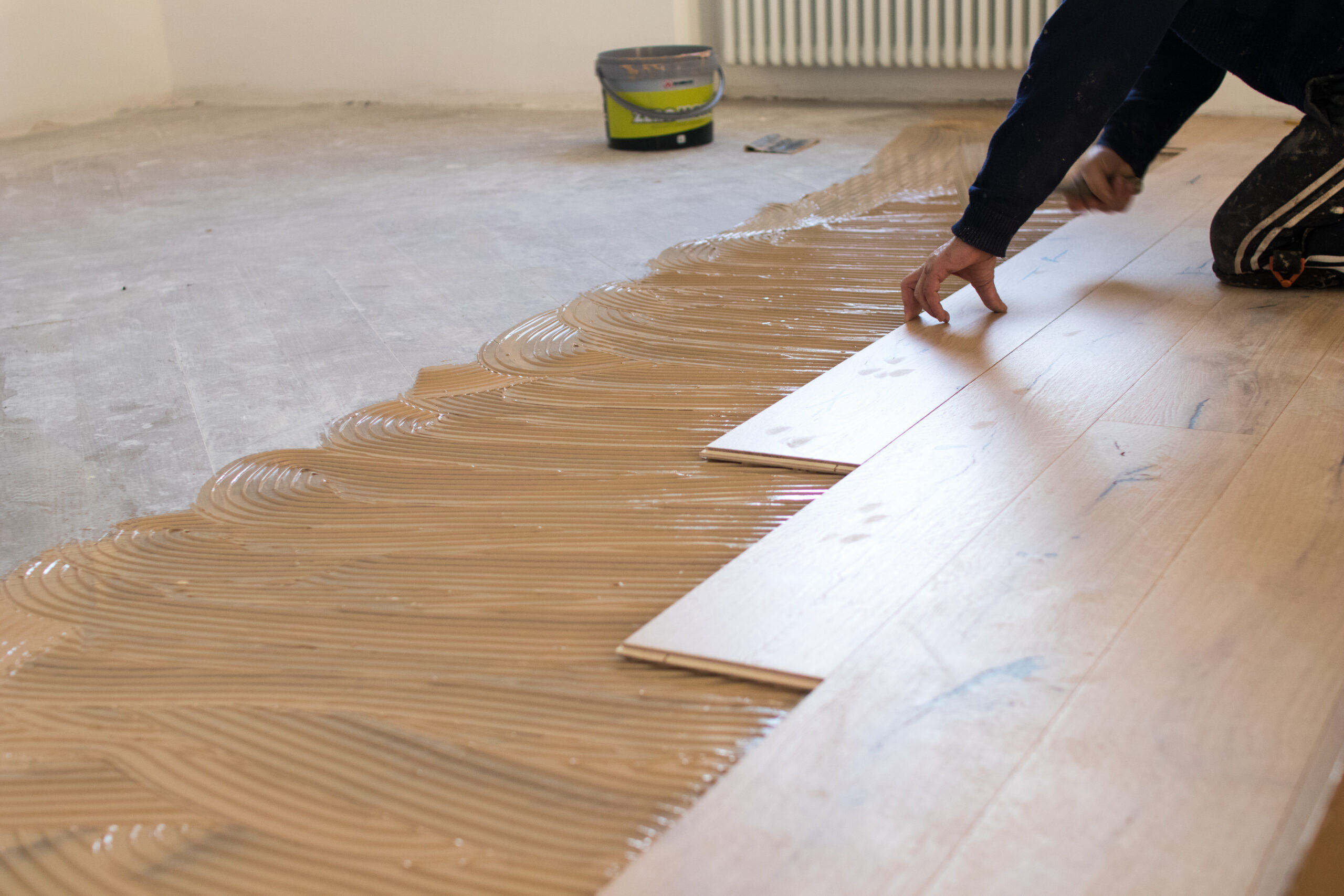
Glue Down
Often used for engineered hardwood over concrete.
Floating Floor
Some engineered hardwood products are designed to float over an underlayment.
Your installer will recommend the method that best matches your flooring and your home.
What Happens During Installation?
Although every project is unique, installation typically follows these steps:
- Protect surrounding areas.
- Remove existing flooring if necessary.
- Prepare the subfloor.
- Lay the hardwood flooring.
- Install transitions and trim.
- Complete detailed cleanup.
- Perform a final walkthrough.
Professional installers continually check alignment, spacing, and overall appearance throughout the project.
How Long Does Hardwood Floor Installation Take?
The timeline depends on:
- Size of the project
- Existing flooring removal
- Staircases
- Room layout
- Custom patterns
- Site conditions
A single room is generally completed much faster than an entire home.
During your consultation, your flooring contractor can provide a project schedule based on your specific installation.
Can You Stay in Your Home?
In many cases, yes.
However, certain stages of the project may be noisy or temporarily limit access to parts of the home.
Some homeowners choose to:
- Install one floor at a time.
- Stay elsewhere during portions of the project.
- Schedule installation before moving into a new home.
Planning ahead makes the process much easier.
What Happens After Installation?
Once installation is complete, your flooring contractor will review:
- Cleaning recommendations
- Maintenance guidelines
- Furniture placement
- Rug recommendations
- Warranty information
If your floor was site-finished, your contractor will also explain when it is safe to walk on the floor, replace furniture, and return area rugs.
Protecting Your New Hardwood Floors
Once your beautiful new floors are installed, a few simple habits help preserve them for years.
We recommend:
- Felt pads under furniture
- Entry mats at exterior doors
- Regular dust mopping
- Prompt spill cleanup
- Maintaining indoor humidity
- Using hardwood-approved cleaning products
Proper maintenance significantly extends the life of your flooring.
Common Mistakes During Hardwood Floor Installation
Avoid these common mistakes:
- Hiring inexperienced installers
- Skipping moisture testing
- Choosing flooring based only on price
- Ignoring manufacturer recommendations
- Failing to prepare the subfloor
- Moving furniture back too soon
- Using the wrong cleaning products immediately after installation
Professional installation helps eliminate many of these risks.
Classic Floor Designs Tip
One of the biggest factors affecting the long-term performance of hardwood flooring isn’t the flooring itself—it’s the quality of the installation. Proper moisture testing, subfloor preparation, and following manufacturer installation guidelines are essential for a floor that performs beautifully for decades.
Hardwood Floor Installation in Washington, DC Homes
Homes throughout Washington, DC, Bethesda, Potomac, Chevy Chase, and Northern Virginia range from historic row homes to modern condominiums and new custom homes.
Each presents unique installation considerations.
Older homes may require additional subfloor preparation or custom transitions, while newer homes often benefit from engineered hardwood and wide plank flooring.
At Classic Floor Designs, every installation is tailored to the home’s construction, the flooring product, and the homeowner’s goals.
Bottom Line
Professional Hardwood Floor Installation is about much more than laying boards. Careful planning, proper preparation, moisture control, and expert craftsmanship all contribute to a beautiful floor that will provide decades of enjoyment.
Working with an experienced flooring contractor helps ensure your investment performs exactly as expected.
What is Hardwood Floor Installation?
Hardwood Floor Installation is the professional process of preparing a home’s subfloor and installing hardwood flooring according to manufacturer specifications for long-term durability and appearance.
How long does hardwood floor installation take?
Most residential projects are completed in several days, although larger or more complex installations may take longer.
Can I stay in my home during installation?
Often, yes. Your installer can explain which areas will be accessible throughout the project.
Why is professional installation important?
Professional installation helps ensure proper moisture control, subfloor preparation, and adherence to manufacturer requirements, all of which contribute to a longer-lasting floor.
Frequently Asked Questions
How long does hardwood floor installation take?
The timeline varies depending on the size and complexity of the project. Your contractor will provide a schedule during the estimate process.
Do I need to move my furniture?
Yes. Furniture should generally be removed from the installation area before work begins.
Does hardwood flooring need to acclimate?
Many hardwood products do, although the requirements vary by product and manufacturer.
Is hardwood floor installation dusty?
Professional installers use dust-control methods whenever possible, especially during removal and site preparation. Refinishing projects typically generate more dust than installing prefinished hardwood.
Can hardwood flooring be installed over concrete?
Yes. Many engineered hardwood products are specifically designed for installation over concrete slabs.
When can I move furniture back?
Your flooring contractor will provide guidance based on the installation method and whether the flooring is prefinished or site-finished.

