

Choosing your floor finish
Don’t choose between prefinished and site-finished hardwood based on appearance alone. Consider installation time, customization, maintenance, existing flooring, and the overall design of your home. For custom renovations and historic Washington, DC homes, site-finished hardwood can provide valuable flexibility for creating a seamless look.
Choosing hardwood flooring is about more than selecting a wood species, plank width, and color. One of the most important decisions is whether to choose prefinished vs. site-finished hardwood flooring.
Both options can create beautiful, durable floors, but they offer different advantages when it comes to installation time, appearance, customization, maintenance, and cost.
For homeowners in Washington, DC, Bethesda, Chevy Chase, Potomac, and Northern Virginia, the right choice often depends on the architecture of the home, the existing flooring, the desired design, and how much customization the project requires.
Prefinished vs. Site-Finished Hardwood Flooring: Quick Answer
Prefinished hardwood flooring is stained and finished at the factory before it arrives at your home. The boards are ready to install, which makes the process faster and reduces the amount of work that needs to be completed inside the house.
Site-finished hardwood flooring is installed unfinished and then sanded, stained if desired, and finished at the job site. This takes longer, but it gives you much more control over the final color, sheen, and appearance.
If speed and minimal disruption are your priorities, prefinished hardwood can be an excellent choice.
If customization, a seamless appearance, or matching existing hardwood is more important, site-finished flooring can offer significant advantages.
For a broader overview of the installation process, see our guide to hardwood floor installation.
Prefinished vs. Site-Finished Hardwood at a Glance
| Feature | Prefinished Hardwood | Site-Finished Hardwood |
|---|---|---|
| Finish applied | Factory | On site |
| Installation speed | Faster | Longer |
| Custom stain | Limited | Extensive |
| Appearance | Individual boards may have subtle bevels | Smooth, continuous surface |
| On-site disruption | Lower | Higher |
| Color consistency | Factory controlled | Custom controlled |
| Design flexibility | Very good | Excellent |
| Best suited for | Fast, convenient installations | Custom and luxury projects |
Neither option is automatically better. The goal is to select the flooring and finishing method that fits the home and the project.
What Is Prefinished Hardwood Flooring?
Prefinished hardwood arrives with its stain and protective finish already applied by the manufacturer.
The boards are manufactured, finished, and cured under controlled factory conditions. Once the flooring is delivered, the installation team can focus primarily on preparing the space and installing the finished boards.
This makes prefinished hardwood particularly attractive when homeowners want to reduce the amount of time their home is disrupted.
Advantages of Prefinished Hardwood
Some of the biggest advantages include:
- Faster installation
- Less on-site sanding and finishing
- Less disruption during the project
- No on-site stain application
- No waiting for multiple finish coats to cure
- Consistent factory-applied color
- Durable factory finishes
- The ability to see the finished flooring before installation
The National Wood Flooring Association explains that factory-finished flooring has its finish and color applied before the product reaches the home, allowing homeowners to walk on the floor immediately after installation.
Prefinished flooring can therefore be a smart option for busy households, occupied homes, and projects where minimizing downtime is important.
What Is Site-Finished Hardwood Flooring?
Site-finished hardwood takes a more customizable approach.
Unfinished boards are installed in the home before the entire floor is sanded and finished. Depending on the desired appearance, the flooring can then be stained, sealed, and finished with the selected finish system.
Because the floor is finished after installation, the process provides greater control over the final appearance.
You can coordinate the floor with:
- Existing hardwood
- Cabinetry
- Interior doors
- Staircases
- Architectural millwork
- Furniture
- Paint colors
- Other flooring materials
The National Wood Flooring Association notes that site finishing provides the greatest customization because homeowners have a much broader range of color and finish options.
That flexibility is one reason site-finished hardwood remains popular for custom homes, luxury renovations, and historic properties.
Prefinished vs. Site-Finished Hardwood: Appearance
One of the biggest differences is the way the finished floor looks.
Many prefinished hardwood products have a small bevel or micro-bevel along the edges of individual boards. These edges can create subtle lines between planks after installation.
Site-finished hardwood is sanded across the entire installed floor. As a result, the finished surface can have a flatter, more continuous appearance.
Neither look is wrong.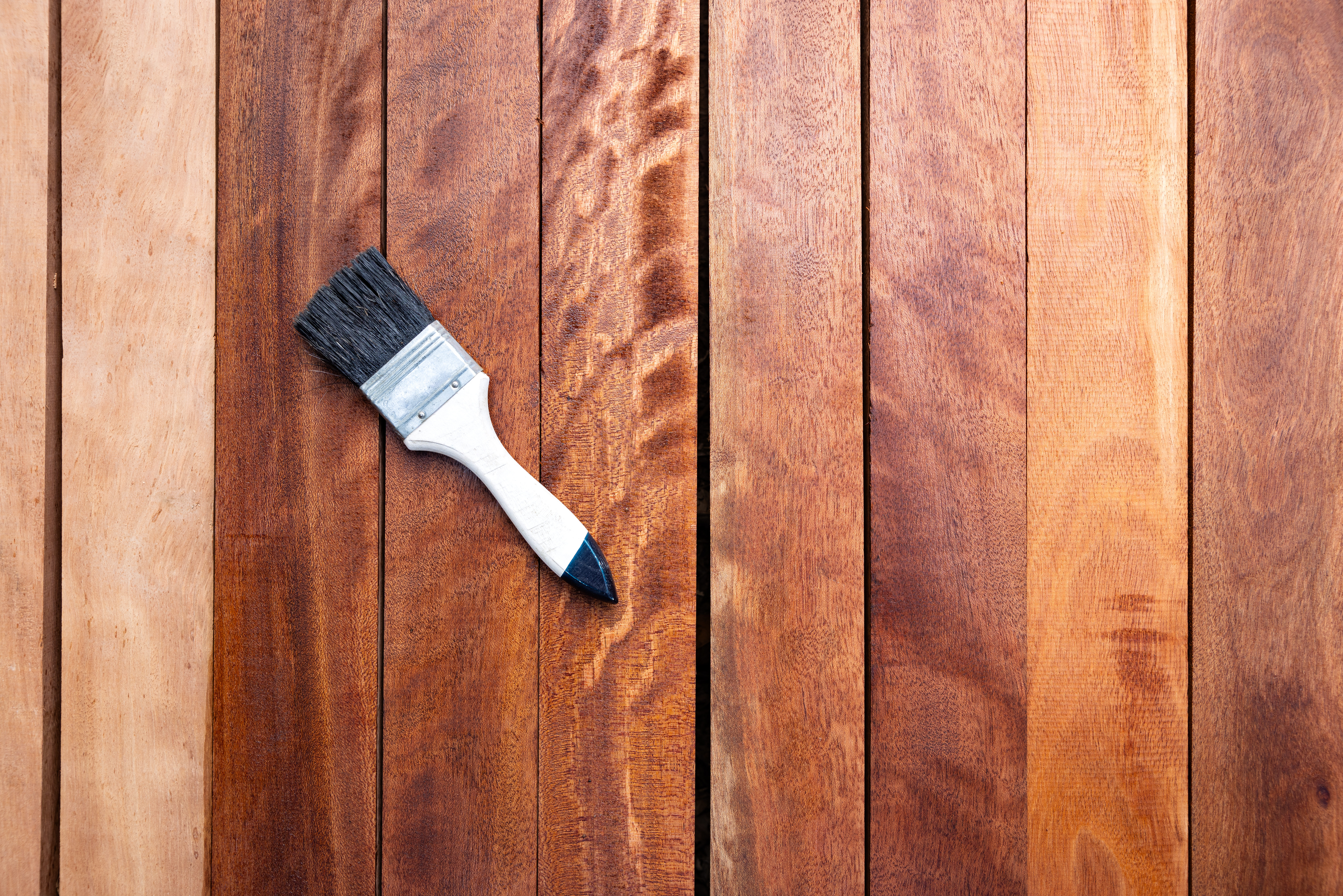
A more defined plank appearance may work beautifully in a casual or contemporary space, while a seamless surface can be particularly attractive in a formal or highly customized interior.
If you are trying to create a specific look, it is worth comparing full-size samples rather than relying only on small finish chips.
Which Is More Durable: Prefinished or Site-Finished Hardwood?
This is one of the most common questions homeowners ask, but durability is not simply a matter of choosing one finishing method over the other.
High-quality prefinished hardwood can have extremely durable factory-applied finishes. Site-applied finishes can also provide excellent long-term performance when the flooring is properly prepared, installed, finished, and maintained.
The overall durability of a hardwood floor depends on factors such as:
- Wood species
- Solid or engineered construction
- Finish quality
- Installation quality
- Household traffic
- Pets
- Cleaning and maintenance
- Indoor environmental conditions
The NWFA maintains industry standards for both factory-finished and unfinished wood flooring and also offers a certification program identifying engineered flooring products designed to be refinished.
In other words, focus on the quality of the entire flooring system, not just whether the finish was applied at a factory or in the home.
Which Is Better for Wide-Plank Hardwood?
Both prefinished and site-finished hardwood are available in wide-plank styles.
Wide-plank flooring can make a particularly strong design statement because wider boards expose more of the wood’s natural grain and character while creating fewer seams across the room.
For a highly customized wide-plank installation, site finishing can be especially appealing because the stain and finish can be selected specifically for the space.
However, premium prefinished wide-plank flooring can also deliver excellent results when the desired color and finish are available from the manufacturer.
The right choice comes down to whether you prioritize customization or convenience.
Choosing Your Floor Finish
Don’t choose between prefinished and site-finished hardwood based on appearance alone. Consider installation time, customization, maintenance, existing flooring, and the overall design of your home. For custom renovations and historic Washington, DC homes, site-finished hardwood can provide valuable flexibility for creating a seamless look.
Can New Hardwood Be Matched to Existing Floors?
Matching new hardwood to existing flooring is one situation where site finishing can provide a major advantage.
Even when two products appear to have similar stain names, differences in wood species, grain, age, manufacturer, finish, and natural color variation can make an exact match difficult.
Site finishing allows a flooring professional to develop a custom stain and finish combination that works with the existing floor.
However, matching hardwood is not always as simple as matching a stain color. Existing floors can change over time because of sunlight, oxidation, previous refinishing, and normal wear.
For a more detailed look at the process, read our guide on how to match existing hardwood floors.
Which Is Better for Historic Washington, DC Homes?
Historic Washington, DC homes often contain original hardwood flooring, narrow-strip flooring, heart pine, decorative borders, and other details that are worth preserving.
Replacing everything may not always be the best approach.
In a renovation, it may be possible to preserve and refinish existing hardwood floors while installing new unfinished hardwood in renovated areas. The new and existing flooring can then be finished together to create a more cohesive appearance.
That ability to customize the final color and finish is one reason site-finished hardwood can be particularly valuable in historic renovations.
For homeowners working on older properties, the goal should not simply be to install a new floor. It should be to create a result that respects the character of the home.
Which Is Better for New Construction?
Both options can work extremely well in new construction.
Prefinished flooring can simplify scheduling because the boards arrive ready to install. There is no need to schedule separate on-site sanding, staining, and finishing stages after installation.
Site-finished flooring, on the other hand, gives architects, designers, builders, and homeowners greater control over the final appearance.
That flexibility can be useful when the flooring needs to coordinate with custom cabinetry, stone countertops, paint colors, doors, millwork, and other architectural finishes.
If the home has a highly customized interior design, site finishing may provide the additional control needed to achieve the intended result.
How Long Does Hardwood Flooring Installation Take?
Prefinished hardwood generally has the advantage when installation speed is the priority.
After the appropriate preparation and acclimation, the finished boards can be installed without the additional sanding and finishing stages required for unfinished hardwood.
Site-finished hardwood involves additional steps, which can include:
- Acclimating the flooring
- Preparing the subfloor
- Installing the unfinished boards
- Sanding the installed floor
- Applying stain, if desired
- Applying the protective finish
- Allowing the finish to dry and cure
The actual timeline depends on the size of the project, flooring type, site conditions, finish system, and other construction taking place in the home.
For a more detailed overview, see our guide to what to expect during hardwood floor installation.
Is Prefinished or Site-Finished Hardwood More Expensive?
There is no universal answer.
Prefinished flooring may have a higher material cost because the finishing process has already been completed at the factory. However, installation can require less on-site labor.
Unfinished hardwood may have a lower initial material cost, but the finished project includes additional costs for sanding, staining, finishing, labor, and project time.
When comparing prices, look at the complete installed cost, not simply the price per square foot of the flooring.
Project cost can be affected by:
- Wood species
- Solid or engineered construction
- Plank width
- Flooring grade
- Manufacturer
- Project size
- Subfloor condition
- Installation method
- Stain selection
- Finish system
- Site conditions
For a premium flooring project, a professional evaluation is often the best way to understand the true cost of each option.
How Indoor Conditions Affect Hardwood Flooring
Regardless of which finishing method you choose, hardwood flooring needs an appropriate indoor environment.
Wood naturally responds to changes in moisture. Excess moisture can contribute to problems such as swelling, warping, and other forms of wood damage. The U.S. Department of Energy’s building-science resources also emphasize the importance of moisture control for protecting building materials and long-term durability.
Proper installation, moisture testing, acclimation, and ongoing indoor environmental control are therefore important parts of a successful hardwood flooring project.
So, Which Should You Choose?
The best choice depends on what matters most to you.
Choose Prefinished Hardwood If You Want:
- Faster installation
- Less disruption
- Minimal on-site finishing
- A factory-controlled finish
- Predictable color
- Excellent durability
- Immediate use after installation
Choose Site-Finished Hardwood If You Want:
- Custom stain colors
- Greater control over sheen and finish
- A smooth, continuous appearance
- Better flexibility when matching existing floors
- More design flexibility
- A customized result for a historic home
- A highly tailored luxury interior
There is no single answer to the question of prefinished vs. site-finished hardwood flooring.
The right choice is the one that works with the architecture of your home, your lifestyle, your timeline, and your design goals.
Find the Right Hardwood Flooring for Your Home
Choosing between prefinished and site-finished hardwood becomes much easier when you can see and compare actual wood species, plank widths, stains, finishes, and samples.
Classic Floor Designs helps homeowners, designers, architects, and builders throughout Washington, DC, Bethesda, Chevy Chase, Potomac, and Northern Virginia select hardwood flooring for renovations, historic homes, and new construction.
From hardwood floor installation to hardwood floor refinishing, our team can help you determine which flooring and finishing approach makes the most sense for your project.
For independent information about hardwood flooring standards, finishes, and wood flooring education, the National Wood Flooring Association is also a useful industry resource.
If you’re ready to compare flooring options for your home, contact Classic Floor Designs to schedule a consultation.
Frequently Asked Questions
Is site-finished hardwood better than prefinished hardwood?
Not necessarily. Site-finished hardwood offers greater customization and a smooth, continuous appearance, while prefinished hardwood provides faster installation and durable factory-applied finishes. The better option depends on your home’s design, installation requirements, and priorities.
Does prefinished hardwood last as long as site-finished hardwood?
Yes. High-quality prefinished and site-finished hardwood floors can both last for decades when properly installed and maintained. Longevity depends on the wood species, board construction, finish quality, household traffic, and maintenance.
Can prefinished hardwood floors be refinished?
Many prefinished hardwood floors can be refinished. Solid prefinished hardwood can generally be refinished, while engineered hardwood depends on the thickness of its real-wood wear layer. A flooring professional can determine whether refinishing is appropriate.
Can new hardwood be matched to existing floors?
Often, yes. Matching depends on the existing wood species, age, grade, cut, stain, finish, and condition. Site-finished hardwood generally provides more flexibility when trying to create a close visual match with existing flooring.
Is site-finished hardwood messy?
Site-finished hardwood requires more on-site work because the flooring must be sanded and finished after installation. However, modern professional dust-containment systems can significantly reduce airborne dust and disruption during the process.

