
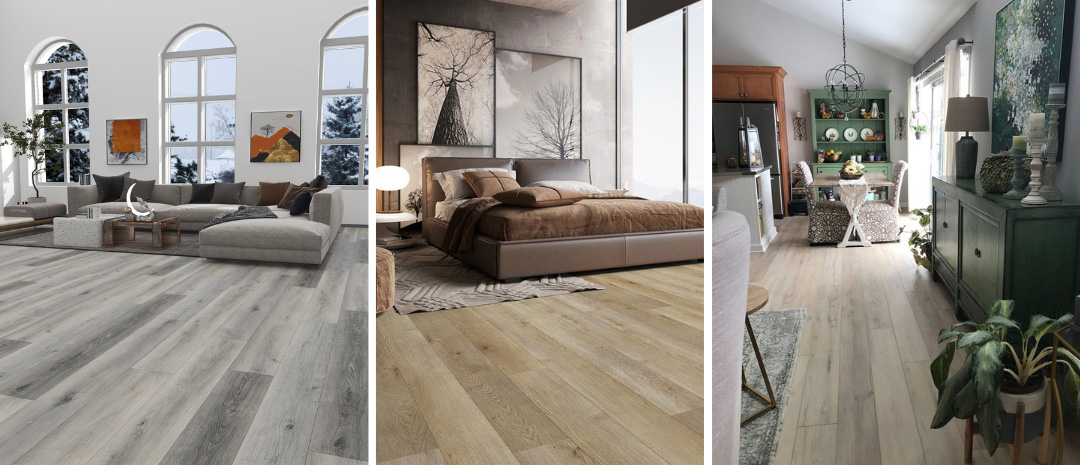
What Should You Consider When Choosing Hardwood Flooring?
When comparing hardwood flooring, consider wood species, solid vs. engineered construction, plank width, grade, grain pattern, stain color, finish, and installation location. White Oak is popular for its versatile grain and neutral appearance, while Red Oak offers warmer tones and more pronounced grain. Wide planks can create a cleaner, more expansive look, while traditional narrow boards often complement historic homes. Your lifestyle matters too—pets, foot traffic, moisture conditions, maintenance preferences, and future refinishing plans should all influence the final choice. A flooring professional can help compare samples in your home’s lighting before you commit to a particular combination.
Hardwood flooring offers an enormous range of possibilities.
From traditional narrow-plank Red Oak to wide-plank White Oak, rift-sawn flooring, custom stains, engineered construction, and decorative patterns, today’s hardwood flooring can be tailored to almost any architectural style.
That variety can also make choosing a floor more complicated.
The right hardwood isn’t determined by color alone. Homeowners should consider wood species, construction, plank width, grade, grain, finish, installation conditions, maintenance, and the architecture of the home.
Here’s how to compare the major hardwood flooring options before making your decision.
1. Start With the Hardwood Species
Wood species affects the natural color, grain, hardness, character, and overall appearance of a floor.
Some of the most popular choices include:
- White Oak
- Red Oak
- Maple
- Hickory
- Walnut
- Cherry
- Reclaimed woods
- Specialty and exotic species
Our complete hardwood flooring species guide explains the differences in greater detail.
White Oak
White Oak is one of today’s most versatile hardwood flooring options.
Its relatively understated grain works beautifully with natural finishes, light stains, wide planks, matte finishes, and contemporary interiors.
It can also work in traditional homes when the plank dimensions and finish are selected appropriately.
Red Oak
Red Oak has warmer undertones and a more pronounced grain pattern.
It remains an excellent option for traditional interiors and is particularly important when homeowners need to match existing Oak flooring.
For a direct comparison, read our guide to White Oak vs. Red Oak hardwood flooring.
Hickory
Hickory is known for hardness and dramatic natural variation.
Its pronounced grain and color differences can make the flooring itself a major design element.
Walnut
Walnut offers naturally rich brown coloring and elegant grain.
It can create a sophisticated appearance in libraries, bedrooms, formal living spaces, and other interiors where warmth is a priority.
2. Solid vs. Engineered Hardwood Flooring
One of the most important decisions is whether to use solid or engineered hardwood.
Both provide a genuine wood surface, but they are constructed differently.
Solid Hardwood
Solid hardwood is manufactured from a single piece of wood.
Depending on its thickness and condition, one of its major advantages is the potential to be sanded and refinished multiple times during its service life.
Engineered Hardwood
Engineered hardwood uses a real hardwood wear layer over a constructed core.
Its layered construction can provide greater dimensional stability in certain installations and makes engineered flooring particularly useful for:
- Wide planks
- Concrete subfloors
- Some below-grade applications
- Areas with greater environmental variation
- Projects requiring particular installation methods
Our guide to engineered vs. solid hardwood flooring provides a detailed comparison.
Neither construction is automatically superior. The right choice depends on the installation location, product quality, wear-layer thickness, subfloor, environmental conditions, and long-term refinishing goals.
3. Choose the Right Hardwood Plank Width
Plank width has a major influence on the overall appearance of a room.
Traditional hardwood floors often use relatively narrow boards, while contemporary luxury floors frequently feature widths of 5 inches or more.
Common options include:
- 2¼–3¼ inches: Traditional strip flooring
- 4–5 inches: Transitional and versatile
- 6–8 inches: Wide-plank appearance
- 9–10+ inches: Dramatic architectural flooring
- Random widths: Historic, rustic, or custom appearance
Our guide to choosing the right hardwood plank width explains how room dimensions, architecture, species, and construction affect this decision.
For larger boards specifically, see our complete wide-plank hardwood flooring guide.
4. Consider How the Wood Is Cut
Premium hardwood can also be selected according to how the log was cut.
Three common appearances are:
Plain sawn: Greater natural grain variation, including cathedral patterns.
Rift sawn: Straight, consistent grain with relatively little flecking.
Quarter sawn: Straighter grain with distinctive medullary ray flecking, particularly in Oak.
Rift-sawn White Oak is especially popular in contemporary interiors because it creates a clean, architectural appearance.
Quarter-sawn Oak provides more visible character and can complement traditional craftsmanship.
Read our guide to rift cut vs. quarter sawn hardwood to compare these options.
5. Hardwood Grade Changes the Look of the Floor
Even flooring made from the same species can look dramatically different depending on the grade.
A cleaner grade may contain relatively consistent color and fewer knots, while character grades intentionally showcase more natural variation.
Depending on the manufacturer, grading can influence the amount of:
- Knots
- Mineral streaks
- Sapwood
- Color variation
- Grain variation
- Natural character
Neither approach is inherently better.
A clean White Oak floor can work beautifully in a minimalist interior, while character-grade Oak can create warmth and individuality in a more relaxed space.
The right grade should support the overall design rather than simply being viewed as a measure of quality.
6. Wide-Plank Hardwood Creates a Different Visual Effect
Wide boards create fewer seams across the floor and allow more of each board’s individual grain to remain visible.
That can create a cleaner, more expansive appearance.
Wide-plank hardwood flooring works particularly well in:
- Open living spaces
- Large kitchens
- Primary bedrooms
- Great rooms
- Contemporary renovations
- Luxury interiors
White Oak is particularly popular for wide-plank installations because its grain works well at larger dimensions.
However, species, flooring construction, moisture conditions, subfloor preparation, and installation method all need to be considered as plank dimensions increase.
7. Hardwood Flooring Patterns Add Architectural Interest
Not every hardwood floor needs to follow a conventional straight-plank layout.
Patterned installations can make the floor itself an architectural feature.
Popular options include:
- Herringbone
- Chevron
- Basketweave
- Diagonal layouts
- Random widths
- Borders and custom details
Our guide to wood floor patterns explains how these layouts affect a room.
Herringbone and chevron are particularly popular in entryways, dining rooms, libraries, hallways, and formal living spaces.
Because patterned flooring depends heavily on accurate layout and alignment, professional hardwood floor installation is especially important.
8. Choose a Hardwood Stain That Works With the Wood
Stain can dramatically change the appearance of hardwood.
Current options range from nearly natural finishes to deep browns and other custom tones.
Before choosing a stain, consider:
- Wood species
- Natural undertones
- Grain
- Cabinetry
- Millwork
- Wall color
- Furniture
- Natural lighting
- Artificial lighting
The same stain can look noticeably different on White Oak, Red Oak, Maple, and other species.
Whenever possible, evaluate stain samples on the actual wood being used for the project rather than relying entirely on a small printed sample or online photograph.
9. Matte, Satin, or Gloss Hardwood Finish?
Finish sheen affects both appearance and how readily everyday surface wear is visible.
Matte: Very little reflection and a natural appearance.
Satin: A subtle sheen that balances elegance and practicality.
Gloss: Greater reflection and a more formal appearance.
Matte and satin finishes have become particularly popular because they complement natural-looking hardwood and can make dust, footprints, and minor surface wear less noticeable than highly reflective finishes.
Our guide to matte vs. satin vs. gloss hardwood floors compares the options in greater detail.
10. Consider Sustainable Hardwood Flooring Options
Sustainability can also influence flooring selection.
Homeowners may consider:
- Responsibly sourced hardwood
- Reclaimed flooring
- Engineered products
- Existing hardwood restoration
- Product-specific environmental certifications
- Low-emitting installation and finishing products
Our guide to sustainable hardwood flooring explains these considerations in greater depth.
The Forest Stewardship Council provides certification related to responsibly managed forest products, while the National Wood Flooring Association provides environmental and technical resources specific to wood flooring.
For some homes, preserving existing material may be preferable to installing something new.
Professional hardwood floor refinishing or hardwood floor restoration can extend the useful life of existing flooring when the wood remains suitable for restoration.
11. Hardwood Flooring for Homes With Pets
Pets don’t automatically rule out hardwood.
The key is selecting the flooring and finish with everyday wear in mind.
Factors to consider include:
- Species hardness
- Grain
- Color
- Finish sheen
- Surface texture
- Pet size and activity
- Nail maintenance
- Household cleaning routine
More pronounced grain and lower-sheen finishes can sometimes make everyday wear less visually noticeable.
Our guide to the best hardwood flooring for pets provides specific recommendations.
12. Hardwood Flooring for Kitchens
Hardwood can also work beautifully in kitchens when the product and installation are appropriate.
White Oak and high-quality engineered hardwood are popular choices because they combine attractive grain with practical performance.
Spills should still be cleaned promptly because real hardwood is not waterproof.
For additional considerations, read our guide to the best hardwood flooring for kitchens.
13. Hardwood Flooring for Historic Homes
Historic properties require a different approach from many new homes.
If original flooring remains, preserving it may be preferable to replacing it.
When new material is necessary, consider the home’s existing:
- Wood species
- Plank dimensions
- Grain
- Millwork
- Stairs
- Architectural period
- Existing stain and finish
Our guide to hardwood flooring for historic Washington DC homes explains how to balance preservation with modern performance.
For rowhouses specifically, explore our recommendations for hardwood floors in NW Washington DC rowhomes and historic properties.
14. Matching Existing Hardwood Flooring
Adding hardwood to an existing home can be more complicated than starting with an empty room.
A convincing match may require identifying the existing:
- Species
- Plank width
- Thickness
- Grade
- Grain
- Cut
- Stain
- Finish
Age also matters because hardwood naturally changes color over time.
Custom staining and finishing can often help new boards blend more naturally with an older floor.
When the original material is unusual or discontinued, custom milling may sometimes be required.
15. Refinishing Can Create a Completely Different Look
If you already have hardwood, don’t assume you need to replace it simply because you dislike its current appearance.
Hardwood floor refinishing can potentially change the stain color, sheen, and overall appearance while retaining the original wood.
Refinishing makes sense when the flooring remains structurally sound and has sufficient material for another sanding.
More extensive problems may require restoration or replacement.
Our guide to hardwood floor refinishing vs. replacement can help you compare the options.
16. Consider the Long-Term Cost, Not Just Price Per Square Foot
Hardwood flooring prices vary significantly.
The material cost depends on factors such as:
- Species
- Grade
- Plank width
- Board length
- Solid vs. engineered construction
- Finish
- Pattern
- Product availability
The complete project can also include removal of existing flooring, subfloor preparation, stairs, transitions, installation, staining, and finishing.
Our hardwood flooring cost guide explains what homeowners should consider when comparing estimates.
17. Proper Installation Is Essential
Even premium hardwood can perform poorly if the installation conditions aren’t appropriate.
Before installation, a flooring professional should consider the subfloor, moisture conditions, flooring construction, installation method, plank dimensions, and jobsite environment.
The National Wood Flooring Association publishes technical standards and professional educational resources related to wood-floor installation, moisture, sanding, finishing, and maintenance.
Learn more about what to expect during hardwood floor installation.
Hardwood Flooring Options for Washington DC Homes
Washington DC contains an unusually diverse mix of architecture, from historic rowhomes to traditional detached residences and contemporary renovations.
That means the best hardwood flooring option depends heavily on the individual property.
A historic home might call for narrow Oak boards or restoration of the original flooring, while a contemporary renovation might use wide-plank rift-sawn White Oak with a natural matte finish.
Homeowners can explore our guide to luxury flooring in Northwest DC for additional local design considerations.
For Chevy Chase and Spring Valley properties, see our guide to the best flooring options for Chevy Chase and Spring Valley homes.
How Do You Choose the Best Hardwood Flooring?
Instead of starting with one characteristic, evaluate the floor as a complete system.
Consider:
- Species — What grain and natural color do you prefer?
- Construction — Is solid or engineered better for the installation?
- Width — Traditional narrow boards or wide planks?
- Grade — Clean and consistent or more natural character?
- Cut — Plain, rift, or quarter sawn?
- Color — Natural or stained?
- Finish — Matte, satin, or gloss?
- Pattern — Straight, herringbone, chevron, or custom?
- Lifestyle — Pets, children, traffic, and maintenance?
- Architecture — Does the floor belong in the home?
Thinking about these elements together produces a much more cohesive result than selecting flooring based solely on a small sample.
Explore Hardwood Flooring Options With Classic Floor Designs
Classic Floor Designs helps homeowners compare hardwood by species, construction, plank width, grade, grain, color, finish, and installation requirements.
Our services include hardwood floor installation, hardwood floor refinishing, and hardwood floor restoration for homes throughout Washington DC and surrounding communities.
If you’re beginning a project, contact Classic Floor Designs to compare hardwood flooring options and determine which combination works best for your home.

