
Rift Cut Hardwood vs Quarter Sawn Hardwood: What’s the Difference?
Is Rift Sawn or Quarter Sawn Hardwood Better?
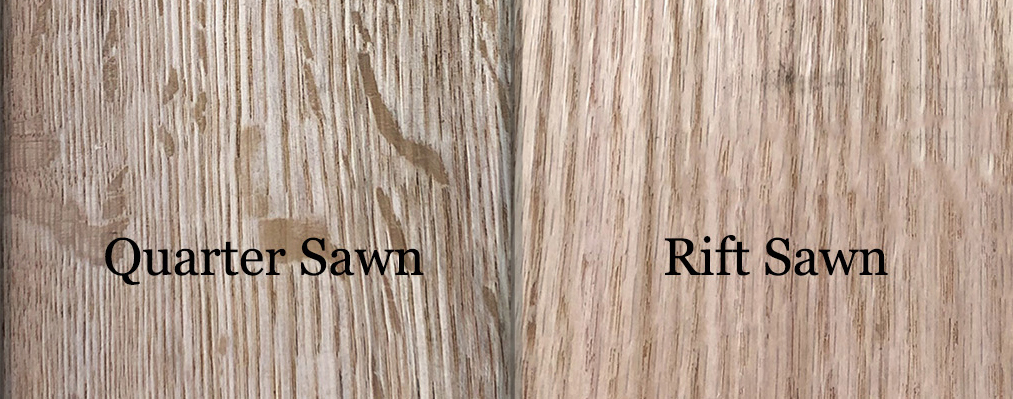
Neither cut is universally better. Rift sawn hardwood is ideal when you want a clean, straight, consistent grain, while quarter sawn hardwood shows more distinctive grain character and medullary ray flecking, especially in White Oak. Both cuts generally provide greater dimensional stability than plain-sawn boards, making them attractive options for premium hardwood installations. Rift sawn White Oak is especially popular in contemporary interiors, while quarter sawn Oak can complement traditional and historic homes. When selecting hardwood flooring, consider the grain appearance, wood species, plank width, grade, finish, room design, and budget rather than choosing based on the cutting method alone.
Rift cut hardwood is one of the most popular premium hardwood flooring options for homeowners who want a clean, modern grain pattern.
When comparing rift cut hardwood vs quarter sawn hardwood, the main differences come down to grain appearance, texture, dimensional stability, and overall design style.
Both cuts are premium choices, particularly when working with White Oak. However, understanding their unique characteristics will help you select the right hardwood flooring for your home.
If you’re still deciding which wood to use, our hardwood flooring species guide is a helpful place to start.
What Is Rift Cut Hardwood?
Rift cut hardwood features a straight, uniform grain with minimal natural variation.
The orientation of the growth rings produces the clean linear appearance that distinguishes rift sawn boards from conventional plain-sawn flooring.
Because there is less dramatic cathedral grain and flecking, rift cut flooring creates a quieter, more consistent surface.
This appearance is particularly popular with White Oak flooring. Homeowners comparing Oak species can learn more in our guide to White Oak vs. Red Oak hardwood flooring.
Why Choose Rift Cut Hardwood?
Homeowners and designers choose rift cut hardwood because it offers:
- A clean, contemporary appearance
- Straight and consistent grain
- Minimal visible flecking
- Excellent dimensional stability
- A sophisticated appearance with natural stains
- Excellent compatibility with wide-plank flooring
As a result, rift cut hardwood works especially well in modern, transitional, minimalist, and Scandinavian-inspired interiors.
It can be particularly striking in wider boards. Our guide to wide-plank hardwood flooring explains how plank width influences both appearance and performance.
What Is Quarter Sawn Hardwood?
Quarter sawn hardwood highlights more of the wood’s natural texture, grain character, and medullary rays.
These rays create distinctive flecking across the face of the board, particularly in species such as White Oak.
Rather than creating the extremely uniform appearance associated with rift sawn flooring, quarter sawing allows more of the natural structure of the wood to become part of the design.
Why Choose Quarter Sawn Hardwood?
Quarter sawn flooring stands out because it provides:
- Rich grain depth and visual interest
- Distinctive medullary ray flecking
- Increased dimensional stability compared with typical plain-sawn boards
- Traditional craftsmanship
- Timeless character for historic interiors
Quarter sawn Oak can be particularly appropriate for older properties where the flooring needs to complement traditional millwork, cabinetry, staircases, and architectural details.
Homeowners renovating an older property can learn more in our guide to hardwood flooring for historic Washington DC homes.
Rift Cut vs Quarter Sawn vs Plain Sawn Hardwood
Rift and quarter sawn hardwood are not the only options.
Plain-sawn hardwood is the most common type and generally displays more varied grain, including the familiar cathedral patterns often associated with Oak flooring.
The basic visual differences are:
Rift sawn: Straight, consistent grain with minimal flecking.
Quarter sawn: Straight grain with more visible ray flecking and natural character.
Plain sawn: Greater grain variation with more prominent cathedral patterns.
None of these cuts is automatically better. The right choice depends on the architecture, desired grain, wood species, plank dimensions, finish, and budget.
Is Rift Cut Hardwood More Stable?
Rift and quarter sawn boards are both valued for their dimensional characteristics.
However, even premium hardwood responds naturally to changes in environmental moisture.
Floor performance depends on more than how the log was cut. Indoor humidity, moisture conditions, subfloor preparation, plank dimensions, flooring construction, and installation method all matter.
Proper hardwood floor installation should take these factors into account before the flooring is installed.
The National Wood Flooring Association also publishes technical standards and educational resources covering wood flooring installation, moisture, sanding, finishing, and maintenance.
Rift Sawn White Oak vs Quarter Sawn White Oak
White Oak is one of the most popular species for both rift and quarter sawn flooring.
Rift sawn White Oak produces a particularly straight and restrained grain. It works beautifully with natural stains, wide planks, and contemporary interiors.
Quarter sawn White Oak reveals more medullary ray flecking, producing a floor with greater texture and traditional character.
Some premium floors combine rift and quarter sawn White Oak to maintain relatively straight grain while allowing subtle variation from board to board.
If you’re considering White Oak for your home, compare its characteristics with other species in our hardwood flooring species guide.
Does Rift Cut Hardwood Work With Wide Planks?
Yes. Rift sawn hardwood can be particularly attractive in wide-plank installations.
The wider surface gives the long, straight grain more room to become visible, creating a clean architectural appearance across large rooms and open floor plans.
Wide-plank floors can also reduce the number of seams visible across a space.
Depending on the width and installation conditions, homeowners may consider either solid or engineered construction. Our comparison of engineered vs. solid hardwood flooring explains where each option works best.
What Finish Looks Best on Rift Cut Hardwood?
Rift cut White Oak often works particularly well with natural or lightly toned stains and matte or satin finishes.
These finishes allow the straight grain to remain visible without introducing excessive reflection.
Quarter sawn flooring can also look beautiful with natural finishes, although deeper stains can emphasize its distinctive grain and ray patterns.
Our guide to matte vs. satin vs. gloss hardwood floors explains how sheen affects both appearance and everyday maintenance.
Is Rift Cut Hardwood More Expensive?
Rift sawn flooring is generally considered a premium product because producing boards with the desired grain orientation can result in lower lumber yield than conventional plain sawing.
However, wood species, grade, plank width, board length, flooring construction, finishing, installation, and availability also affect the final project price.
Before comparing flooring solely by material cost, read our hardwood flooring cost guide for a breakdown of the factors that influence the total investment.
Rift Cut Hardwood for Historic Washington DC Homes
Rift sawn flooring is often associated with contemporary interiors, but it can also work beautifully in older Washington DC properties.
The key is selecting flooring that complements the architecture.
For example, quarter sawn Oak may emphasize historic character, while rift sawn White Oak can provide a cleaner appearance when an older property is being thoughtfully modernized.
For Northwest DC rowhomes and older properties, see our guide to the best hardwood floors for NW Washington DC rowhomes and historic properties.
Homeowners in other historic neighborhoods can also explore our guide to hardwood flooring for historic Washington DC homes.
Can Rift Cut Hardwood Match an Existing Floor?
Possibly, but matching existing hardwood requires more than identifying the species.
A flooring professional should compare the species, cut, grade, plank width, thickness, grain, stain color, finish, and age of the original flooring.
This becomes especially important when extending hardwood into an addition or replacing damaged sections of an older floor.
If the existing flooring remains structurally sound but looks worn, hardwood floor refinishing may also be preferable to replacing it.
For severely damaged or historically significant flooring, hardwood floor restoration may allow more of the original material to be preserved.
Rift Cut Hardwood vs Quarter Sawn: Which One Is Best?
Both options offer premium appearance and performance, but the right choice depends primarily on your design goals.
Choose rift cut hardwood if you want:
- Clean, straight grain
- Minimal flecking
- Contemporary styling
- A consistent appearance
- Wide-plank flooring with understated grain
Choose quarter sawn hardwood if you want:
- More visible grain character
- Distinctive ray flecking
- Traditional craftsmanship
- A floor suited to classic or historic interiors
Neither option is universally better.
The best floor should balance wood species, grain, plank width, construction, finish, architecture, maintenance requirements, and budget.
Get Expert Hardwood Flooring Advice in Washington DC
Still deciding between rift cut hardwood and quarter sawn hardwood?
Classic Floor Designs can help you compare rift sawn, quarter sawn, plain-sawn, solid, engineered, and wide-plank hardwood flooring for your project.
We work with homeowners throughout Washington DC, Maryland, and Northern Virginia, including those renovating historic properties and installing premium new hardwood.
You can also explore our guide to luxury flooring in Northwest DC or learn about flooring choices for Chevy Chase and Spring Valley homes.
Visit our Washington DC flooring showroom or contact Classic Floor Designs to compare hardwood samples and discuss your project.

