

What Is the Best Plank Width for Hardwood Floors?
There is no single best width for every home. Traditional hardwood flooring often uses 2¼- to 3¼-inch boards, while contemporary wide-plank floors commonly begin around 5 inches and may reach 7, 8, 10 inches or wider. Wider boards create fewer seams and showcase more natural grain, while narrower planks can complement traditional and historic interiors. When choosing a width, consider room proportions, wood species, solid vs. engineered construction, existing flooring, architecture, and installation conditions. For very wide boards, engineered hardwood is often considered because its construction can provide greater dimensional stability.
Choosing the right hardwood floor plank width can dramatically change how a room looks and feels.
While wood species, stain color, and finish receive a lot of attention, plank dimensions are equally important. Narrow boards create a very different visual rhythm from an 8- or 10-inch wide-plank floor.
Today’s hardwood flooring is available in everything from traditional narrow strips to dramatic extra-wide planks and custom random-width combinations.
The best choice depends on your home’s architecture, room dimensions, wood species, existing flooring, desired style, and flooring construction.
Here’s how to choose.
What Is a Standard Hardwood Floor Plank Width?
Traditional hardwood floors frequently use relatively narrow boards.
Common dimensions include:
- 2¼ inches — classic strip flooring
- 3¼ inches — traditional with slightly more visual width
- 4–5 inches — versatile transitional widths
- 6–8 inches — wide-plank appearance
- 9–10+ inches — dramatic premium wide-plank flooring
There is no universal “correct” size.
A 2¼-inch Red Oak floor may look completely appropriate in a historic home, while 7-inch White Oak can create the clean architectural appearance desired in a contemporary renovation.
Our hardwood flooring species guide can help you compare how grain and natural color interact with plank dimensions.
Narrow vs. Wide Hardwood Planks
One of the easiest ways to narrow your options is to decide whether you prefer the visual effect of narrow or wide boards.
Narrow Hardwood Planks
Narrow flooring creates more seams across the room, producing a more active and traditional visual rhythm.
It can work particularly well in:
- Historic homes
- Traditional interiors
- Smaller rooms
- Existing homes with narrow hardwood
- Projects where new flooring must match an original floor
Traditional narrow Oak flooring is especially common in older Washington DC properties.
If you’re extending an existing floor, plank width is one of several details that must be matched. Our guide to matching existing hardwood floors explains how species, thickness, grade, stain, and finish also affect the result.
Wide Hardwood Planks
Wide boards create fewer seams and allow more of each board’s natural grain to remain visible.
They can produce a cleaner, more expansive appearance and are particularly popular in luxury renovations and open floor plans.
Our complete guide to wide-plank hardwood flooring covers the benefits, costs, species, and construction options in greater detail.
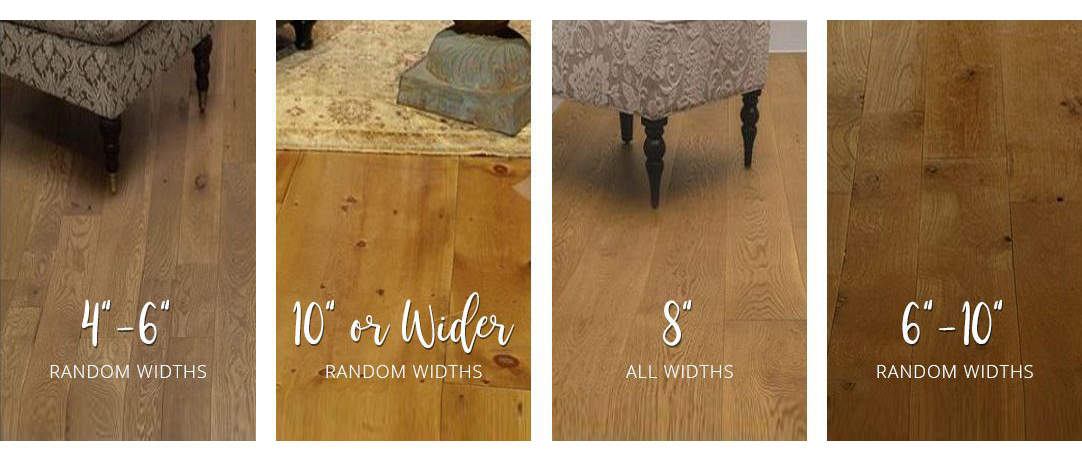
4–6 Inch Hardwood Planks: Versatile and Balanced
Hardwood in the 4- to 6-inch range provides a useful middle ground between traditional strip flooring and dramatic wide planks.
These widths work with many architectural styles because they don’t push the floor too strongly toward either a historic or ultra-contemporary appearance.
They can complement:
- Traditional homes
- Transitional interiors
- Townhouses
- Condominiums
- Contemporary renovations
- Smaller open floor plans
A consistent width creates an orderly appearance, while combining several widths can introduce more movement and natural variation.
6–10 Inch Hardwood Planks: Wide and Architectural
Boards between 6 and 10 inches create the wide-plank appearance many homeowners associate with premium hardwood flooring.
These widths allow grain, knots, mineral streaks, and natural color variation to become more prominent.
Wide boards work especially well in:
- Great rooms
- Open kitchens
- Dining rooms
- Primary bedrooms
- Large entryways
- Open-concept renovations
White Oak is particularly popular for this application because its grain can work with both contemporary and traditional interiors.
Homeowners considering Oak should also compare White Oak vs. Red Oak hardwood flooring.
8-Inch Hardwood Flooring: Clean and Consistent
A uniform 8-inch plank creates a strong wide-plank appearance without the additional variation introduced by random widths.
Using one consistent width produces cleaner lines across the room.
This can work particularly well with:
- Natural White Oak
- Rift-sawn Oak
- Engineered hardwood
- Long board lengths
- Matte finishes
- Contemporary interiors
For homeowners interested in especially straight and consistent grain, our guide to rift cut vs. quarter sawn hardwood explains how the way lumber is cut affects its appearance.
10-Inch and Wider Hardwood: A Custom Statement
Extra-wide boards can create a dramatic architectural floor.
At 10 inches or wider, each board becomes a much more noticeable part of the design.
The floor can showcase:
- Natural grain
- Character
- Knots
- Color variation
- Long board lengths
- Distinctive lumber cuts
However, selecting very wide flooring requires more than choosing a dimension from a sample board.
The species, construction, moisture conditions, subfloor, installation method, and indoor environment should all be evaluated.
Professional hardwood floor installation becomes particularly important with premium wide-plank products.
What Is Random-Width Hardwood Flooring?
Random-width—or mixed-width—flooring combines boards of several different widths rather than repeating a single dimension.
For example, an installation might combine 4-, 5-, and 6-inch boards or use a broader combination such as 6-, 8-, and 10-inch planks.
The resulting floor has a more varied rhythm and can feel less uniform than a single-width installation.
Random-width flooring can complement:
- Farmhouse interiors
- Historic properties
- Rustic designs
- Traditional homes
- Custom luxury interiors
It’s also one of several ways to make the layout itself part of the floor’s design.
Our guide to wood floor patterns explores random-width flooring along with herringbone, chevron, diagonal, and basketweave layouts.
Does Wide-Plank Flooring Make a Room Look Bigger?
It can.
Wide boards create fewer seams across the floor, which can give a room a cleaner and less visually interrupted appearance.
That can be particularly effective in open-concept spaces where the same hardwood runs continuously through several rooms.
However, room size should not be the only consideration.
A wide floor can work beautifully in a smaller room when the wood color, board length, direction, furniture scale, and lighting all work together.
Likewise, narrow flooring can look entirely appropriate in a large traditional home.
The goal should be to choose dimensions that complement the architecture rather than following a rigid rule based on square footage.
Does Board Length Matter Too?
Yes.
Plank width gets most of the attention, but board length also influences the appearance of a hardwood floor.
Longer boards mean fewer end joints, which can create a cleaner visual flow.
This becomes particularly noticeable with wide flooring.
An 8-inch-wide floor made primarily from short boards can look much busier than the same width installed with longer lengths.
When comparing premium hardwood products, consider average board length and length distribution in addition to width.
Which Wood Species Is Best for Wide Planks?
White Oak is one of the most popular choices for wide-plank hardwood because of its versatile grain and ability to work with many finishes.
Other options include:
- European White Oak
- Hickory
- Walnut
- Red Oak
- Maple
Each species has different characteristics.
Hickory provides dramatic grain and color variation, while Walnut creates a naturally darker and more refined appearance.
Our hardwood flooring species guide compares hardness, grain, color, and design characteristics across popular woods.
Engineered vs. Solid Hardwood for Wide Planks
Both solid and engineered hardwood are available in wide widths.
Solid hardwood is wood throughout the thickness of the board and offers excellent longevity and refinishing potential.
Engineered hardwood has a genuine hardwood wear layer over a constructed core designed to provide additional dimensional stability.
That stability can make engineered construction particularly attractive for very wide boards or installations where environmental conditions and subfloor type require additional consideration.
Our complete comparison of engineered vs. solid hardwood flooring explains the advantages and limitations of each.
How Does Plank Width Affect Hardwood Flooring Cost?
Wider flooring often costs more than conventional narrow boards.
Producing large, high-quality boards can require more selective raw material, particularly when homeowners also want long lengths, premium grades, specific grain characteristics, or unusual species.
The total project cost also depends on:
- Species
- Grade
- Board length
- Solid vs. engineered construction
- Prefinished vs. site-finished flooring
- Subfloor preparation
- Installation complexity
- Pattern
- Stain and finish
Our hardwood flooring cost guide explains these variables in greater detail.
What Plank Width Is Best for Historic Homes?
Older homes require a more thoughtful approach.
If the goal is historic preservation, matching the original flooring may be more appropriate than introducing dramatically wider contemporary boards.
Traditional Washington DC homes often contain narrower Oak flooring that contributes to the architectural character of the property.
Our guide to hardwood flooring for historic Washington DC homes covers species, plank dimensions, restoration, and matching considerations.
For rowhomes specifically, see our guide to the best hardwood floors for NW Washington DC rowhomes and historic properties.
Wide planks can still work in historic properties—especially when the home is being thoughtfully modernized—but the flooring should feel intentional within the architecture.
Choosing Plank Width for Chevy Chase and Spring Valley Homes
Traditional detached homes in Chevy Chase and Spring Valley can accommodate a wide range of flooring styles.
A renovation may use wide-plank White Oak to introduce a cleaner contemporary feel, while a restoration project may preserve or reproduce narrower flooring that complements the home’s original architecture.
Our guide to flooring options for Chevy Chase and Spring Valley homes provides additional ideas for selecting flooring based on the character of these properties.
How Finish Changes the Appearance of Wide-Plank Flooring
Plank width is only one part of the design.
A wide White Oak floor with a natural matte finish can look very different from the same dimensions finished with a darker stain and higher sheen.
Matte and satin finishes are particularly popular with wide-plank floors because they allow the natural grain to remain prominent without excessive reflection.
Our comparison of matte vs. satin vs. gloss hardwood floors explains how sheen affects appearance and everyday maintenance.
Installation Matters More as Planks Get Wider
Premium wide-plank flooring requires careful planning.
Before installation, factors such as subfloor condition, moisture levels, flooring construction, installation method, and jobsite conditions should be evaluated.
Wood naturally responds to environmental moisture, so product selection and installation should account for the characteristics of the specific flooring being used.
The National Wood Flooring Association publishes technical standards and educational resources for professional wood-floor installation, moisture testing, sanding, finishing, and maintenance.
Professional hardwood floor installation helps ensure those technical requirements are considered alongside the design.
What Hardwood Plank Width Should You Choose?
A useful starting point is:
2¼–3¼ inches: Traditional and historic appearance.
4–5 inches: Versatile and transitional.
6–8 inches: Premium wide-plank appearance.
9–10+ inches: Dramatic architectural statement.
Random widths: Natural, historic, rustic, or custom appearance.
But these are design guidelines—not strict rules.
The best hardwood floor plank width should complement your room proportions, architecture, wood species, grain, flooring construction, existing floors, and overall interior design.
Compare Hardwood Plank Widths in Person
Plank width can be difficult to judge from a small online photograph.
An 8-inch board may appear enormous as an individual sample but look completely different when several boards are laid together across a large room.
When possible, compare multiple boards or larger flooring samples and evaluate them alongside your cabinetry, paint colors, stone, furniture, and natural lighting.
Classic Floor Designs helps homeowners compare hardwood flooring by species, plank width, grade, construction, color, and finish for homes throughout Washington DC and surrounding communities.
Contact Classic Floor Designs to compare narrow, wide, and random-width hardwood options for your home.

